
Bring a large pot of water to a rolling boil. Drop in your 8 ounces of noodles and cook until just under al dente. Drain thoroughly in a colander, toss with a tiny drop of oil to prevent sticking, and set aside.
2. Sear the Protein
Heat the 1 tablespoon of sesame oil in a large, heavy-bottomed skillet or wok over medium-high heat. Add the 1 pound of lean ground beef, spreading it across the hot surface. Let it sear undisturbed for 2 to 3 minutes to initiate browning, then use a sturdy spatula to break the meat into small crumbles. Continue cooking for 5 to 7 minutes until fully browned. If excessive grease pools at the bottom, tilt the pan and ladle it out cleanly.
3. Bloom the Fresh Aromatics
Add the 4 cloves of minced garlic and 1 teaspoon of grated ginger directly to the hot meat matrix. Stir continuously for exactly 30 seconds. This brief exposure to the warm cooking lipids “blooms” the volatile essential oils in the garlic and ginger, making them incredibly fragrant without risking burning.
4. Build the Mongolian Base
In a small bowl, whisk together the ⅓ cup of low-sodium soy sauce, ⅓ cup of brown sugar, ½ cup of beef broth, and 1 tablespoon of hoisin sauce. Pour this mixture directly into the skillet with the seared beef, stirring well to scrape up any browned bits stuck to the bottom of the pan. Bring the liquid to a gentle, bubbling simmer.
5. Hydrate the Thickening Slurry
In a separate small cup, vigorously mix the 1 tablespoon of cornstarch with the 2 tablespoons of cold water until it forms a smooth, milky white liquid. Pour this slurry slowly into the simmering skillet while stirring the meat constantly. Cook for 1 to 2 minutes; the sauce will transition rapidly from a thin liquid into a thick, glossy, mahogany-colored glaze that clings tightly to the beef.
6. Coat and Incorporate
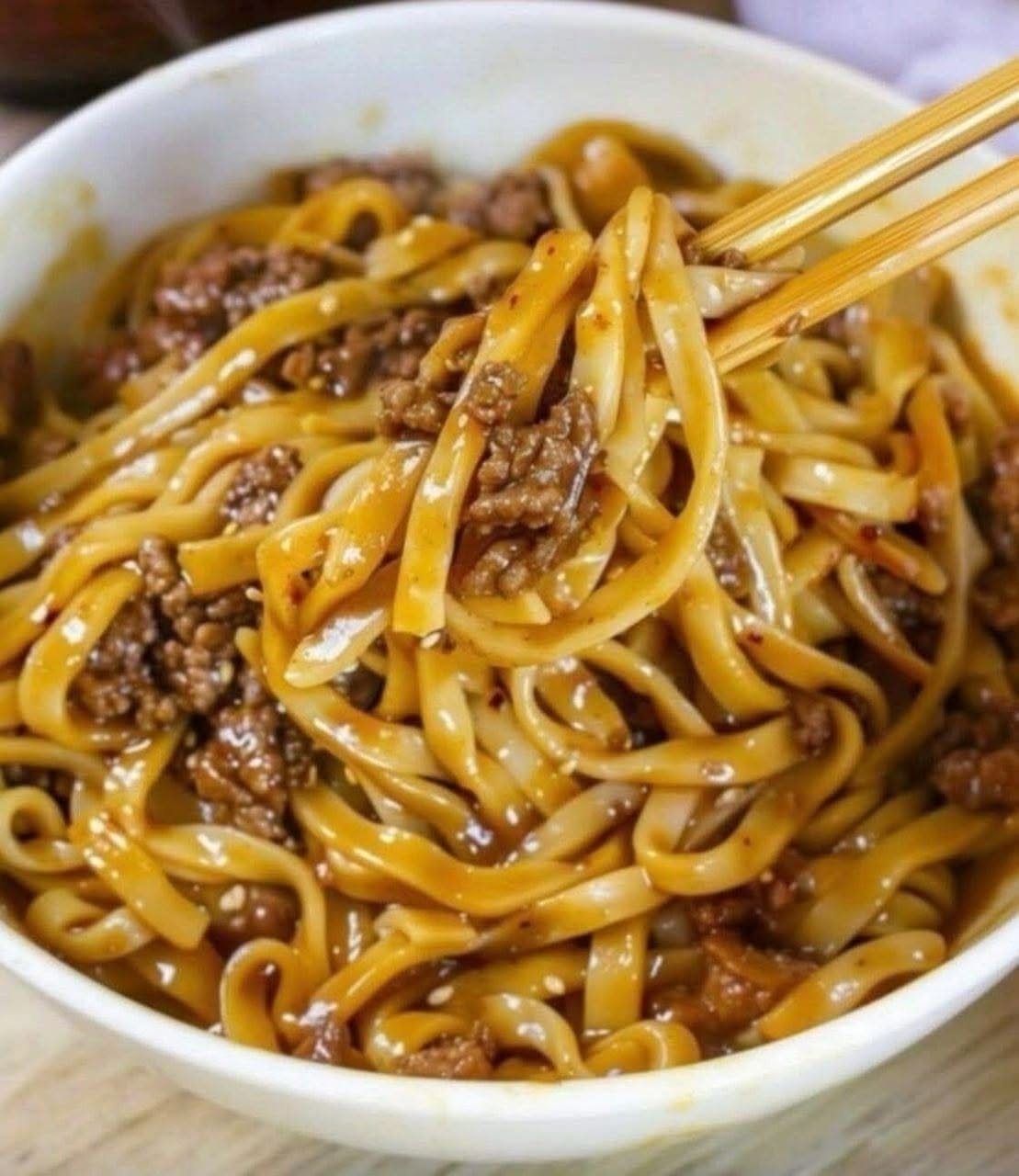
Dump the cooked, drained noodles into the skillet with the glazed Mongolian beef. Using tongs or two spatulas, toss the mixture dynamically over medium heat for 1 to 2 minutes, ensuring every noodle strand is uniformly coated in the sticky sauce.
7. Garnish and Serve
Remove the skillet entirely from the heat source. Shower the top with your sliced green onions and a sprinkle of sesame seeds. Serve immediately alongside a crisp cucumber salad or steamed broccoli florets.
Storage and Reheating Guidelines
-
Refrigeration: This dish stores exceptionally well as the noodles continue to pull in the complex umami flavors overnight. Store leftovers in an airtight container in the refrigerator for up to 3 days.
-
The Skillet Reheat Protocol: To prevent the noodles from turning soft, avoid long microwave cycles. Instead, place leftovers in a skillet over medium-low heat. Add a tiny splash of water or beef broth (1 to 2 tablespoons) to loosen the tightly bound cornstarch glaze, cover with a lid, and heat for 5 minutes, tossing occasionally until piping hot.
