
ADVERTISEMENT
My mama keeps a tin of these hidden in her pantry and thinks nobody knows. Only 3 ingredients.
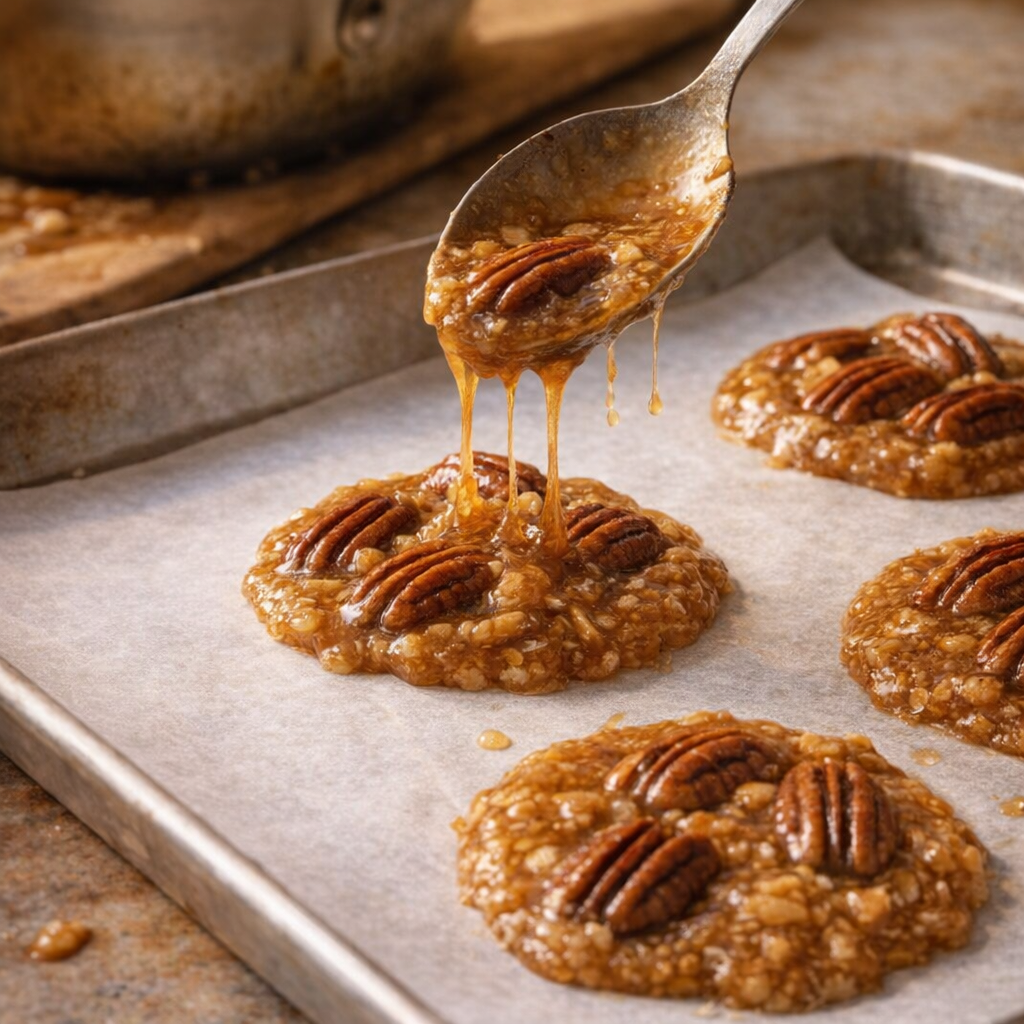
Once the caramel has reached the soft-ball stage and is a rich golden brown, immediately remove the pan from the heat. Working quickly, stir in the pecan halves until they are evenly coated and glossy. The mixture will thicken as you stir.
Using a tablespoon or small cookie scoop, drop heaping spoonfuls of the hot pecan mixture onto the parchment-lined baking sheet, spacing them slightly apart. Aim to get several pecan halves in each round, nudging them into place with your spoon if needed for even distribution.
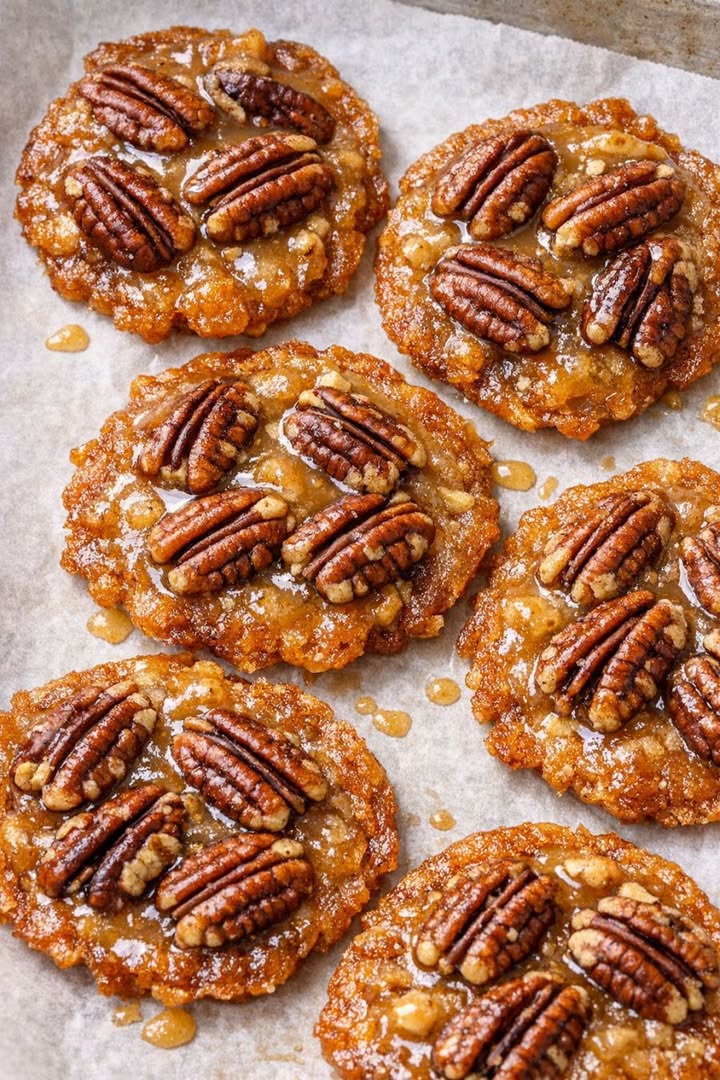
Let the pralines cool completely at room temperature, 30–45 minutes, until they are firm to the touch with crisp edges and slightly glossy centers. They will continue to set as they cool.
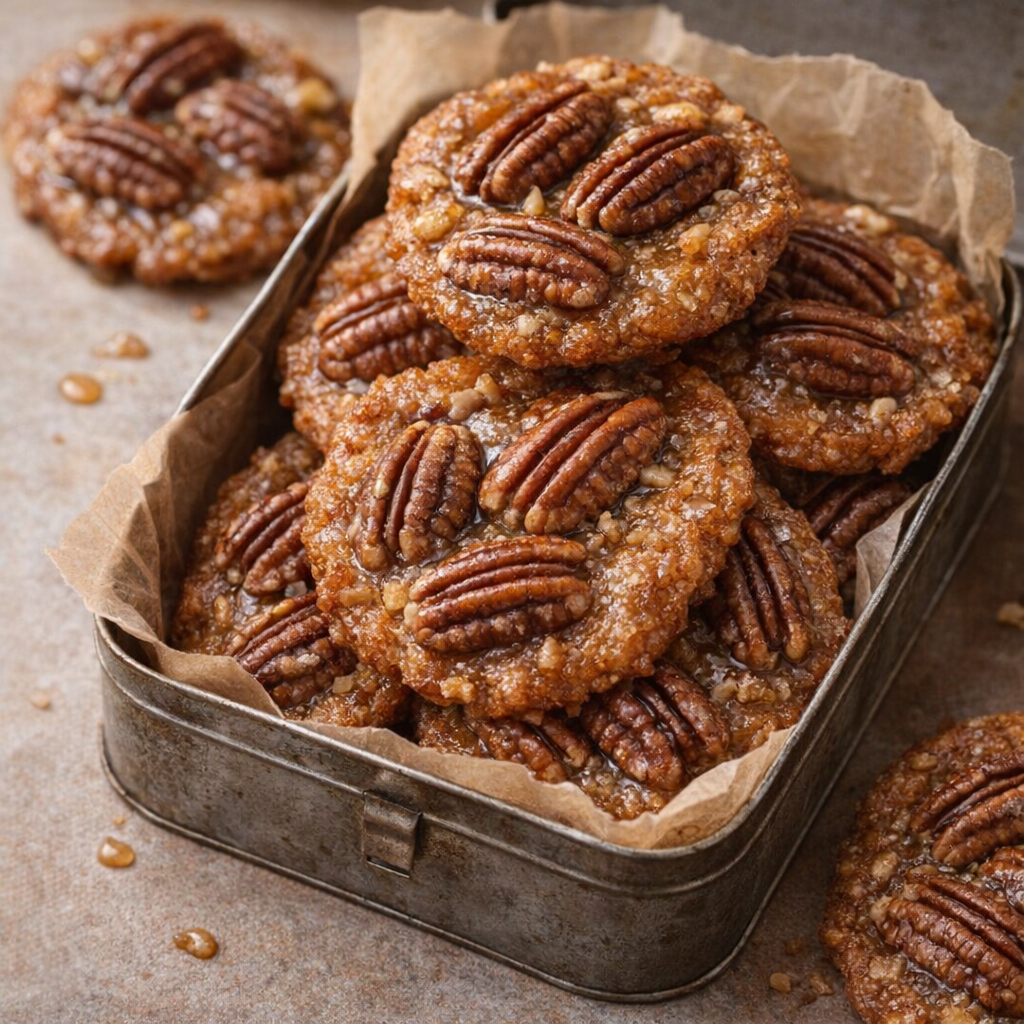
Once fully cooled and set, carefully peel the pralines from the parchment. Store in an airtight tin or container at room temperature, layered between pieces of parchment to prevent sticking. They’re best within 5–7 days, though they rarely last that long in a house that knows where the tin is hidden.
Variations & Tips
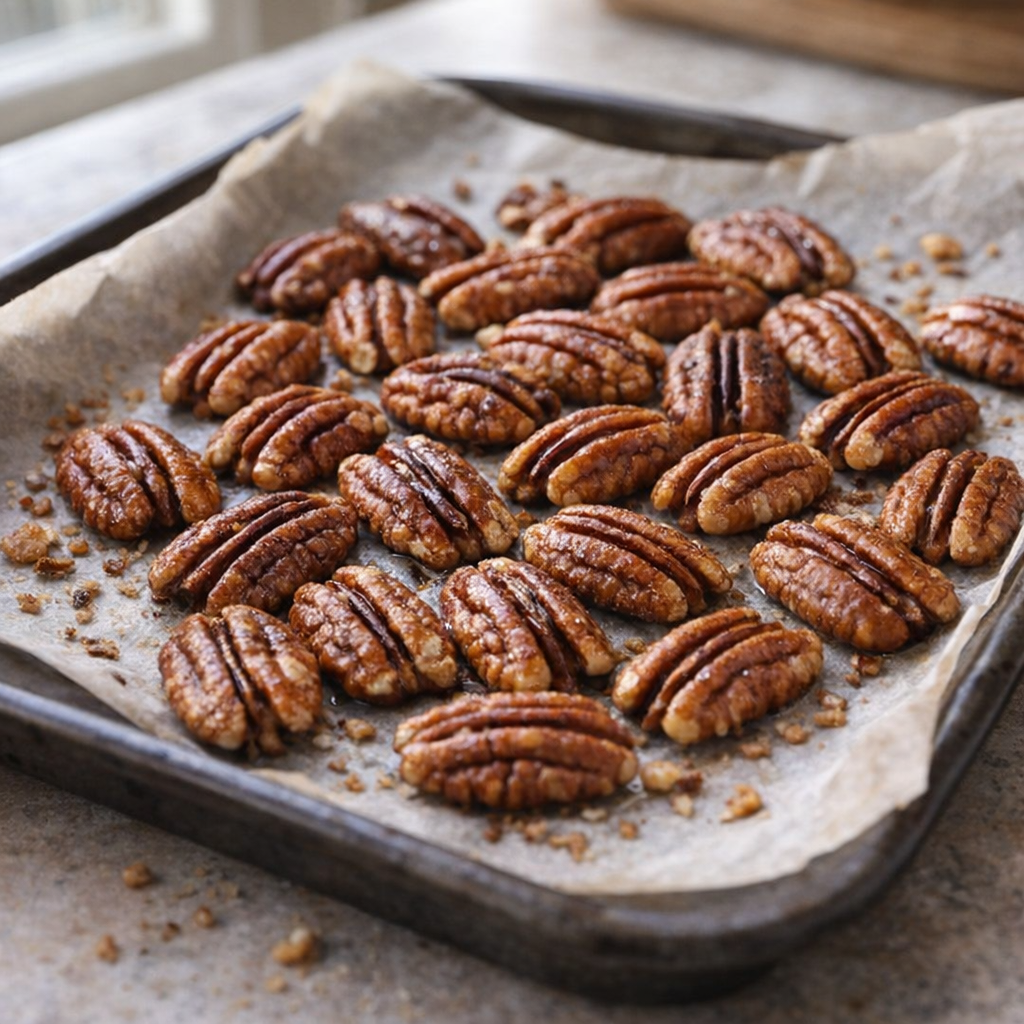
For a deeper flavor, toast the pecan halves in a 350°F (175°C) oven for 6–8 minutes before starting the recipe; let them cool slightly before stirring into the hot caramel. If you like a hint of salt, sprinkle a tiny pinch of flaky sea salt over the pralines immediately after spooning them onto the parchment—this keeps the recipe itself at three ingredients while adding a finishing touch.
You can also play with texture: use a mix of pecan halves and coarse chopped pecans for rounds that hold together more tightly while still showing off a few pretty halves on top. For a slightly softer, chewier praline, remove the caramel from the heat a bit earlier, when the test ball in cold water is very soft but still holds its shape; for a crisper praline, cook just a minute longer, but avoid taking it to a dark brown, which can taste bitter. If you prefer smaller, bite-size candies, make teaspoon-sized rounds and reduce the cooling time.
Food safety and handling tips: The sugar mixture becomes extremely hot—work carefully, use a stable, heavy-bottomed pan, and keep children and pets away from the stove while cooking and spooning the pralines. Never touch or taste the caramel directly from the pot; always use the cold-water test. Allow pralines to cool completely before transferring to containers to prevent condensation, which can make them sticky. Store at room temperature in a dry place; do not refrigerate, as moisture can cause the sugar to weep. Discard any pralines that develop off smells, visible mold, or an unusually sticky, syrupy surface after storage.
